
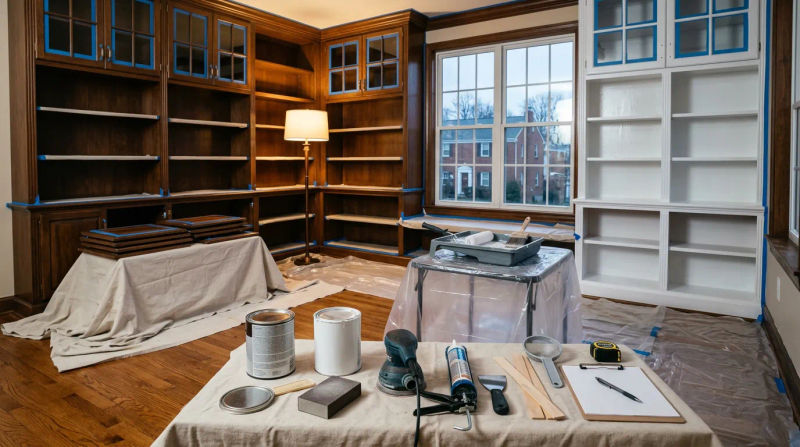
When the leaves start to pile up and the evenings get darker here in Mount Lebanon, I find that many homeowners turn their attention indoors. It’s a popular time to tackle those interior upgrades you’ve been thinking about all summer, especially before the busy holiday season arrives. One of the most impactful projects my team and I handle this time of year is painting built-in bookshelves and cabinets.
It’s a fantastic way to completely transform a room, but the first question on everyone’s mind is always, “What’s it going to cost?” It’s a fair question, and as a painter who has worked in countless homes across the Pittsburgh area for over 14 years, I believe in being upfront about it. The truth is, the price can vary quite a bit. My goal here is to give you a transparent look at the real built-in painting cost so you can budget with confidence.
Average Costs in Mount Lebanon
Many of the beautiful homes in Mount Lebanon, especially those classic Tudors from the 1920s and 30s, feature original, high-quality built-ins. They have character and craftsmanship you just don’t see anymore, which is why refreshing them is a much better option than replacing them. The cost to paint bookshelves Mount Lebanon homeowners can expect depends heavily on the size, detail, and condition of the unit.
Based on my experience, here are some realistic ballpark ranges for professional painting services in our area:
- Small, Simple Built-Ins: For a single, standard-sized bookcase next to a fireplace with open shelves, you might expect a price range of $600 to $1,100. This typically involves straightforward prep and a brushed-and-rolled finish.
- Medium, Multi-Section Built-Ins: This could be a larger wall unit with a combination of open shelves and lower cabinet doors. The cost for a project of this scale often falls between $1,200 and $2,800. The addition of doors and more complex trim increases the labor involved.
- Large or Ornate Built-Ins: For an entire library wall, a complex entertainment center with many drawers and doors, or units with intricate dental molding and glass-paned doors, the cost can range from $3,000 to $6,500+. These projects require extensive prep work and often benefit from a spray finish for a flawless look, which involves significant masking and protection of the surrounding room.
These are just estimates, of course. The final price tag is determined by a specific set of variables, which we'll dive into next.
Factors That Affect Price
Understanding the professional built-in painting price factors is key to understanding your quote. When I assess a project, I’m looking at much more than just the square footage. Here’s what my team and I consider:
- Preparation is Everything: This is the single biggest factor. Older built-ins, especially those from pre-1940s homes, might have layers of old oil-based paint, glossy varnish, or years of nicks and dings. Proper preparation involves cleaning, deglossing, sanding every surface, filling imperfections, and caulking gaps. A dark wood stain being painted white will also require a specialized stain-blocking primer to prevent bleed-through. This meticulous prep work is what ensures a durable, beautiful finish, and it accounts for a significant portion of the labor.
- Size and Complexity: It’s simple: more surface area means more time and materials. The number of shelves (fixed or adjustable), cabinet doors, drawers, and decorative elements like crown molding or fluted trim all add to the complexity and, therefore, the cost.
- Desired Finish and Application Method: Are you okay with a high-quality hand-brushed finish, or do you want a perfectly smooth, factory-like surface? To paint built-ins without brush marks, spraying is the superior method. However, spraying requires us to turn your room into a protected spray booth - masking floors, walls, ceilings, and furniture with plastic and paper. This setup and cleanup time adds to the labor costs, even though the spraying itself is fast.
- Condition of the Unit: If there are significant repairs needed, like fixing broken trim, damaged shelves, or malfunctioning hardware, that will be factored into the estimate as separate line items for carpentry work.
- Choice of Paint: While the cost difference between a standard paint and a premium product might only be $30-$50 per gallon, the results are worlds apart. I almost always recommend a high-quality urethane alkyd enamel for built-ins. It levels out beautifully for a smoother finish and cures to a much harder, more durable surface that can withstand books, decor, and daily use.
How to Get the Best Value
Getting the best value doesn’t always mean finding the lowest price. It means investing in a result that will look great and last for years. Here are a few practical tips:
- Do the Easy Prep Yourself: You can save a little on labor by clearing everything off the shelves and out of the cabinets before your painters arrive. If you're comfortable, you can also remove any hardware like knobs or pulls.
- Bundle with Other Projects: If you're already planning to have the walls and trim in the same room painted, adding the built-ins to the project is often more cost-effective than hiring a team for just the built-ins alone. It saves on setup and travel time.
- Prioritize Durability: Opting for the cheaper paint might save you a hundred dollars upfront, but if it scuffs easily or starts to fail in a few years, you’ll be paying to have it redone. Investing in the right primer and a durable topcoat is the best long-term value.
- Get an Itemized Quote: A transparent quote that breaks down costs for prep, labor, and materials helps you understand exactly what you're paying for. At rodger weber painting and home improvements, we make sure our quotes are clear so you can see how each step contributes to the final number.
Questions to Ask Your Contractor
When you're comparing bids, you want to make sure you're comparing apples to apples. Here are the essential questions I’d recommend asking any painting contractor:
- What is your specific process for preparing the surface before priming? (Look for answers that include cleaning, sanding, and filling imperfections.)
- What primer and topcoat paint do you recommend for this project, and why? (They should be able to explain the benefits of the products they choose.)
- How will you protect my floors, furniture, and the rest of my home from dust and paint?
- Will you be brushing and rolling, or will you be spraying the built-ins?
- How many coats of primer and paint are included in the quote?
- Can you provide a portfolio of similar built-in projects you’ve completed?
Painting built-ins is a detailed, skill-intensive job. It's an investment in your home’s character and value, and taking the time to hire a professional who doesn't cut corners on prep work will pay off for years to come.
I hope this guide has given you a clearer picture of what to expect. A freshly painted built-in can truly anchor a room and make it feel new again.
For a personalized estimate in Mount Lebanon, contact rodger weber painting and home improvements for a free consultation.